TL;DR
A minimal skincare routine is replacing complicated beauty regimens. Instead of layering numerous products, many people are focusing on a few well-chosen steps that support long-term skin health and consistency.
The minimal skincare routine is quickly becoming the modern standard for skin care.
For years, beauty routines expanded into elaborate multi-step processes involving cleansers, toners, serums, treatments, oils, and masks layered in precise order. While these routines promised results, they also created confusion, expense, and sometimes irritation.
In response, many dermatologists and skincare professionals are encouraging a simpler approach. Fewer products, used consistently, often support healthier skin than constantly switching between treatments.
The goal is no longer perfection.
It is balance.
The End of Overcomplicated Skincare
The popularity of complex skincare routines grew rapidly over the past decade, particularly through social media and beauty influencers. Ten-step routines became common, and new products appeared constantly.
Yet the skin itself rarely requires that level of intervention.
In many cases, too many active ingredients can disrupt the skin’s natural balance. Over-exfoliation, ingredient conflicts, and constant experimentation can lead to redness, dryness, and irritation.
A minimal skincare routine removes that pressure. It focuses on stability rather than constant correction.
Why Fewer Products Often Work Better
Healthy skin relies on consistency.
When routines change frequently, the skin rarely has time to adapt. Simplifying a routine allows the skin barrier to function normally, reducing the likelihood of irritation or inflammation.
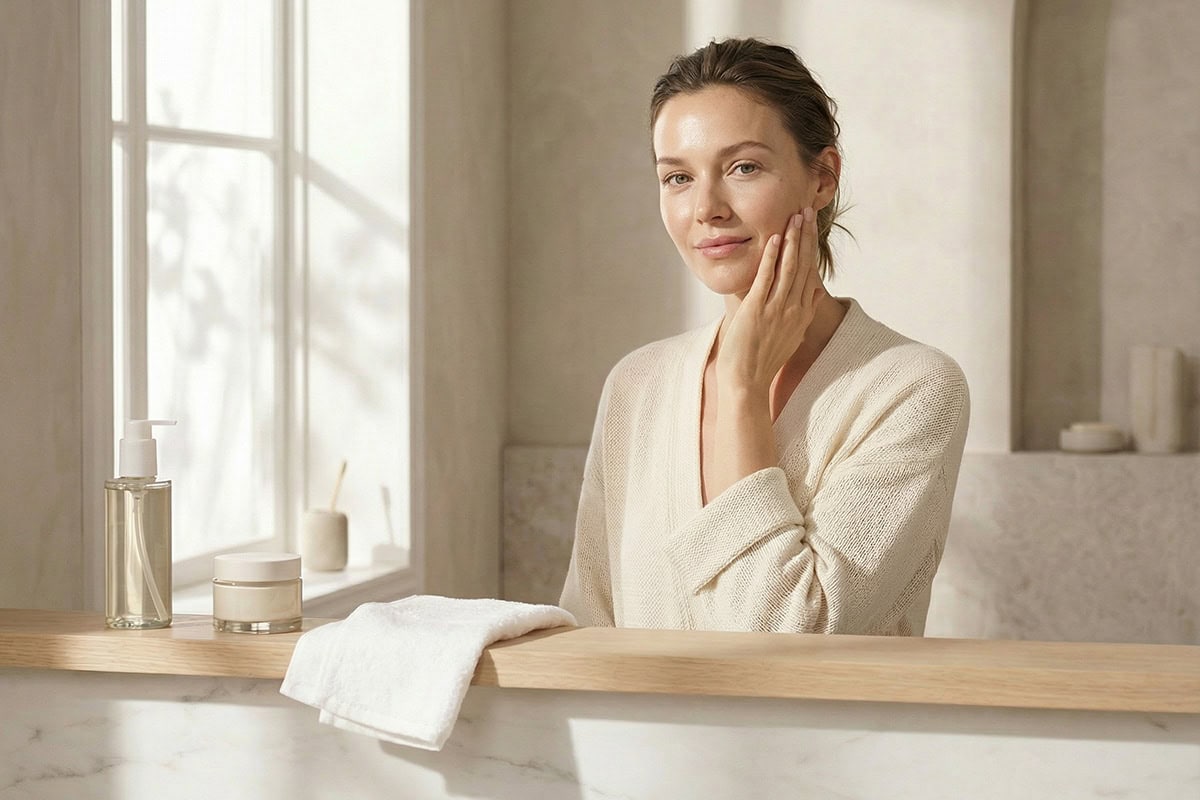
A typical minimal routine usually includes just a few core steps:
- gentle cleansing
- hydration
- protection from sun exposure
These fundamentals are often enough to support healthy skin over time.
According to guidance from the American Academy of Dermatology, a simple routine that includes cleansing, moisturising, and daily sun protection forms the foundation of effective skincare.
Skin Health Over Skin Perfection
Another reason minimal skincare is gaining traction is a shift in mindset.
Rather than chasing flawless or filtered skin, many people are prioritising long-term skin health. Texture, tone variation, and natural ageing are increasingly accepted as normal features rather than problems to correct.
This perspective aligns with broader lifestyle changes. Habits such as sleep quality, hydration, and daily routines often influence skin appearance as much as topical products.
Many of the same principles appear in broader wellness habits, including consistent morning routines that support overall balance.
Consistency Beats Complexity
A minimal skincare routine works best when it becomes part of daily rhythm.
Small habits performed consistently tend to produce more stable results than complicated routines followed inconsistently. Skin responds well to predictability.
That means using the same gentle products regularly rather than constantly introducing new treatments.
Over time, the skin barrier strengthens, sensitivity often decreases, and the overall complexion appears calmer and more balanced.
The Future of Minimal Beauty
The move toward minimal skincare reflects a broader cultural shift.
Across fashion, lifestyle, and wellness, people are reassessing how much complexity they truly need. Just as wardrobes are becoming more intentional, skincare routines are becoming more focused.
The goal is no longer to use more products.
It is to use the right ones consistently.
This approach mirrors similar ideas in lifestyle choices, including the growing emphasis on fewer, better purchases that prioritise quality and longevity over quantity.
Closing Notes
Minimal skincare is not about doing less for the sake of simplicity.
It is about understanding what the skin actually needs and removing what it does not.
In many cases, a thoughtful routine built around a few consistent steps can support healthier skin than complicated regimens that constantly change.
Sometimes the most effective routine is also the simplest.
FAQ
What is a minimal skincare routine?
A minimal skincare routine focuses on a small number of essential steps such as cleansing, moisturising, and sun protection rather than complex multi-product regimens.
Is a minimal skincare routine suitable for all skin types?
Yes. Most dermatologists recommend starting with a simple routine and adjusting it based on individual skin needs rather than using many products at once.
How long does it take for a simplified skincare routine to show results?
Skin often needs several weeks to adjust to a consistent routine. Many people begin to notice improvements in balance and irritation after four to six weeks.
Why are simpler skincare routines becoming more popular?
Many people are moving away from complex beauty routines and focusing on consistency, skin barrier health, and long-term skin balance.